

Siegel PiTech
PhD Impact Fellowship
For Students | For Organizations

Would you like to leverage your technical expertise in the public interest?
The Siegel PiTech PhD Impact Fellowship supports Cornell University PhD students in technical fields to conduct 13-week summer externships with nonprofit and public sector organizations across New York. Students immerse themselves in real-world projects, gain exposure to the technology challenges facing public interest organizations, and contribute critical skills and expertise to advancing their host organization’s mission.
Applications for Summer 2027 will open in January 2027. Please email us at pitech-info@tech.cornell.edu if you’d like to receive notification when it does.
Timeline and Application
The Siegel PiTech PhD Impact Fellowship provides Cornell University PhD students with project matching and direct financial support as they embed within a community, NGO, foundation, or public sector organization.
This year’s fellowship term is May 21 to August 20, 2027. PhD Impact Fellows commit 50% effort (about 20 hours per week), leaving enough space in their schedules for independent thesis research.
Applications for Summer 2027 will open in January 2027.
Upcoming Information Sessions
Cornell University PhD students are invited to join us for an upcoming information session to learn more about the fellowship. Please register in advance by clicking the hyperlinks below.
How does it work?
Information Sessions: Learn more about the fellowship at a virtual information session.
Review Organization Profiles & Projects: Familiarize yourself with prospective organization partners and their proposed projects (available when the application opens).
Submit an Application: Complete an application and specify all of the organizations you’d like to learn more about.
Discovery Calls: Meet the organizations on group calls and ask questions about their projects.
Submit Rankings: Rank the top five organizations you are interested in working with.
Match Proposals: PiTech proposes a limited number of matches.
1:1 Matching Call: Matched candidates meet with their prospective host supervisor to confirm the match before it is finalized.
Project Scoping & Onboarding: Set milestones and deliverables with your host supervisor and complete any onboarding the organization requires.
Fellowship Term: The fellowship during the summer term. See the Cornell academic calendar for exact dates.
Program Details
Who is eligible? The application is open to Cornell PhD students from both Ithaca and NYC campuses, studying technical fields at Cornell Tech, Cornell’s Bowers College of Computing and Information Science, College of Engineering, and the Center for Applied Mathematics.
-
PiTech PhD Impact Fellows receive a summer Graduate Research Assistantship (GRA) funded by the PiTech Initiative. For up-to-date stipend rates, please visit https://gradschool.cornell.edu/financial-support/stipend-rates/.
Fellows will additionally have access to the resources offered by Cornell Tech, including a campus desk and access to an extensive network of academics and researchers pursuing initiatives at the cutting edge of their scientific disciplines, as well as practitioners working across New York City's government agencies, nonprofits, and industry.
-
PhD Impact Fellows are embedded with their host organization for a summer term that runs between Cornell’s spring and fall semesters. See the Cornell academic calendar for this year’s dates. Fellows commit 50% effort, about 20 hours per week, which leaves time for thesis research. The workload may vary from week to week with the needs of the project. Each fellow and their host manager agree on a working schedule and regular check-ins before the fellowship begins.
Most host organizations are based in New York City, and all placements are in-person or hybrid. We encourage Ithaca-based students to relocate to NYC for the summer. During the application period, students will learn each organization’s on-site expectations. Remote work from outside the United States is not possible.
-
Fellows apply their technical expertise to a project that advances their host organization’s public interest mission. Fellows work in service of the host organization’s needs. Publications are welcome, but they aren’t the goal.
Projects call for a range of technical skills, such as machine learning and AI, natural language processing, LLM evaluation, computer vision, statistical modeling and causal inference, optimization and simulation, predictive analytics, algorithmic fairness and auditing, data engineering and visualization, user research and human-centered design, and privacy and security.
Fellows are responsible for maintaining a strong working relationship with their host manager(s) and for working proactively throughout the fellowship to meet agreed-upon goals and milestones. Fellows also have periodic check-ins with the PiTech team for support and to keep the fellowship on track.
At the end of the fellowship, fellows write a blog post to be featured on the PiTech website. They are invited to stay involved in Cornell Tech’s growing PiTech community.
-
The application has two stages. In the first stage, students submit an application and review the project proposals from each host organization. Students should look at every proposal and indicate interest in each organization they’d like to learn more about. This isn’t a commitment, so we encourage students to cast a wide net.
After applications close, students are invited to group discovery calls, where they can meet the organizations and ask questions about the proposed projects. In the second stage, students fill out a ranking form with their top five choices.
Placements are limited each year, so not every applicant will be matched. PiTech proposes a limited number of matches based on several factors, including student interests and skills, organizational needs, and project impact. We also consider how far along each student is in their PhD, and we confer with PhD advisors before proposing any match. Students who receive a proposed match then have a 1:1 matching call with their prospective host supervisor to confirm the match before it is finalized. Once matches are final, fellows work with their host supervisor to establish the scope of the project and complete any onboarding steps the organization requires.






















Who We Work With
Our New York partner organizations draw from government, civil society, and the nonprofit sector, spanning many critical subject matter domains, including:
Health & Accessibility
Social & Economic Opportunity
Public Services
Environment & Sustainability
Media, Culture, & Education

Previous Siegel PiTech PhD Impact Fellows
-

Christian Belardi
NYC Botanical Garden
-

Federica Bologna
NYC Health+Hospitals
-

Anthonia Carter
women.nyc
-

Janet Chen
NYC Housing Authority
-

Breanna Green
Block Party
-

Serena Guo
YAI
-

Rebecca Hicke
Good Call
-

Byung Jae Cho
City of Ithaca
-
Zachary James
NYC Emergency Management
-

Kimia Kasemian
Oxfam
-

Tuan-He Lee
Consumer Reports
-
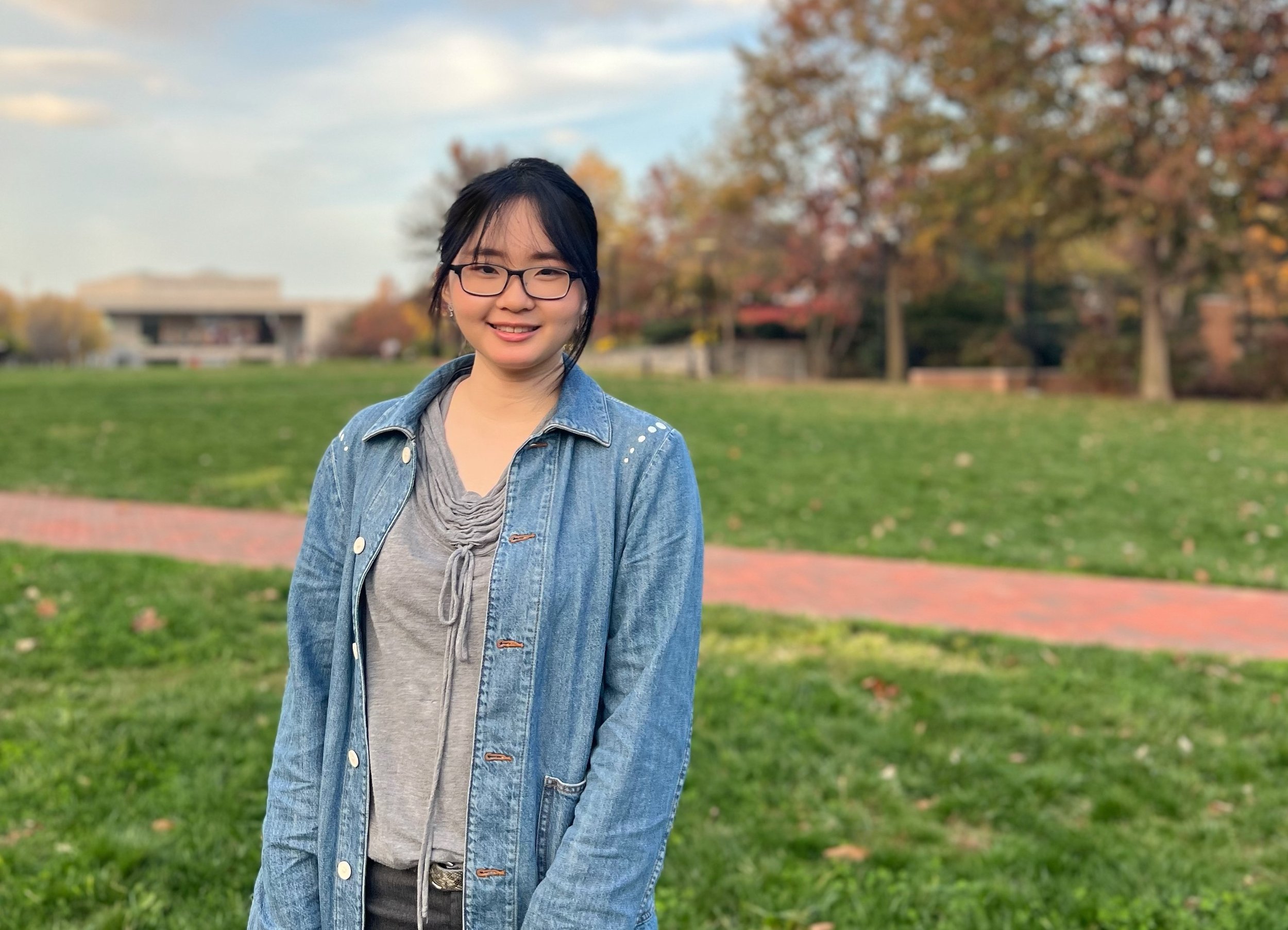
Fengyang Lin
Consumer Reports
-

Zhi Liu
New York Public Library
-

Joy Ming
NYC Civic Engagement Commission
-

Pegah Moradi
Consumer Reports
-

Maya Mundell
Blue Ridge Labs - Robin Hood
-

Mahika Phutane
NYC MOPD
-

Hauke Sandhaus
YAI
-

Rosamond Thalken
NYC Botanical Garden
-

Sara Venkatraman
NYC Department of Design and Construction
-
Rojin Zandi
NYC Health+Hospitals


