
Modeling Heat Pump Adoption, System Costs, and Bill Alignment Under Alternative Electricity Rates in New York
Written by Ke Xin Zuo (Sherry)

The Challenge
As a PiTech Rubinstein PhD Innovation Fellow, I continued my collaboration with Switchbox, a NYC think tank tackling climate policy reform across the United States using data-driven methods. During the past summer, I began exploring retail electricity rates through developing an agent-based representation of consumer response to dynamic tariff structures. This fall, I extended my analysis to evaluating the design of such tariffs, working to capture how heat pump adoption, system costs, and bill fairness interact under alternative electricity rates in New York.
To give some context, New York is planning for a future with significantly more electric heating. Residential heat pumps are expected to play a central role in meeting climate targets, especially as buildings move away from fossil fuels. At the same time, utilities and regulators are redesigning electricity rates through proceedings such as Grid of the Future, with the goals of:
maintaining revenue adequacy,
improving the accuracy of system costs,
and sending clearer price signals as the grid changes.
Electrification and rate reform are deeply intertwined, yet they are often evaluated independently. This creates a risk that rates designed to perform well under today’s conditions may behave very differently as electric heating becomes more widespread. The central challenge is that heat pumps fundamentally change both the level and the seasonal profile of electricity demand. As households electrify heating, winter electricity use grows rapidly, placing new pressure on generation, transmission, and distribution systems. These changes affect total system costs, but they also raise an equally important question: how those costs are recovered from customers during the transition. In particular, when heat pump adoption is partial rather than universal (as will be the case for many years) rates must allocate costs across a mixed population of heat-pump and non-heat-pump households. Whether that allocation is perceived as fair and predictable can strongly influence adoption outcomes.
New York will experience a prolonged transition period in which early heat-pump adopters coexist with households that continue to rely on fossil heating. During this period, system costs evolve gradually, while the customer base paying for those costs changes composition. A rate that appears reasonable at one stage of adoption may create unintended cost shifts at another. Understanding these dynamics requires a bill analysis that explicitly follows adoption over time.
This leads to the central research question: As heat pumps are adopted gradually across the residential sector, do proposed electricity rates fairly and consistently allocate system costs, or do they unintentionally create winners and losers along the way?
The Approach
To address this gap, this project develops a framework that evaluates electricity rates along a realistic heat-pump adoption pathway. Rather than asking how rates perform in a single future scenario, the analysis tracks how household bills and cost recovery change as heat-pump adoption increases step by step. At each stage, the framework compares what different groups of households pay on their electricity bills to the costs associated with serving their electricity use. All rate designs are evaluated under the same total revenue requirement, ensuring that observed differences reflect how costs are allocated across customers, not changes in utility revenues.
Heat-pump adoption is modeled as a cumulative process. All households begin without electric heating, and adoption increases incrementally over time. Once a household adopts a heat pump, it remains electrified in all subsequent periods. To operationalize this approach, the analysis draws on detailed building simulations from NREL’s residential building stock model (ResStock) to construct a representative population of New York households. Rather than relying on stylized or average load shapes, ResStock is used to sample thousands of individual homes with realistic variation in size, vintage, heating systems, and usage patterns. Each sampled household carries a population weight, allowing results to be scaled to the full residential sector while preserving underlying heterogeneity (see Figure 1).
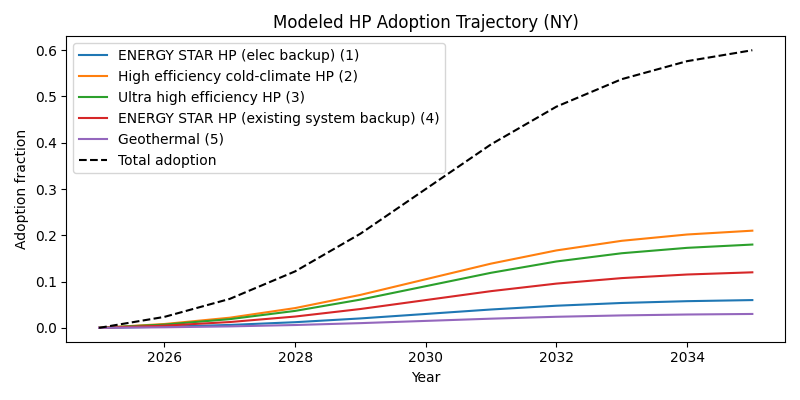
Figure 1 (Mixed Heat-Pump Adoption Over Time)
Bill Analysis
As heat pump adoption progresses, an important question we address is one of bill alignment: whether the way households are charged for electricity reflects the costs their usage creates for the system. Today, most residential customers in New York are charged primarily through flat volumetric rates, where each kilowatt-hour is priced the same regardless of when it is consumed. Under this structure, higher annual electricity use directly translates into higher bills, implicitly assuming that system costs scale in proportion to total energy consumption.
In practice, electricity system costs are driven by a combination factors, including energy production, peak capacity needs, and network infrastructure sized to meet extreme conditions. Many of these costs are determined by a relatively small number of high-demand hours, rather than by total volumetric consumption. As a result, charging purely on a flat per-kilowatt-hour basis can lead to misalignment: households that use more electricity over the year, such as heat-pump customers, may pay substantially more even if their additional usage does not proportionally increase system costs. Conversely, households with lower annual usage may pay less than the costs associated with serving them.
Seasonal rates have been proposed as a response to this issue. In current New York discussions, these designs typically feature higher prices during traditional summer peak periods and discounted prices during the winter. The motivation is twofold. First, seasonal rates aim to better reflect when the system is under stress, rather than averaging costs across the entire year. Second, winter discounts are intended to avoid penalizing heat-pump households simply for shifting heating energy from fossil fuels to electricity during months when electrification is a policy goal. Seasonal rates therefore represent an attempt to rebalance bills so that cost recovery is more closely tied to system conditions, while remaining administratively simple.
Figure 2 places these designs in context by comparing them to real-time pricing, which serves as a cost-causative benchmark. Under real-time pricing, electricity prices vary hour by hour based on system conditions, rising when capacity is scarce and falling when the system is unconstrained. Because prices respond directly to operational costs and reliability needs, real-time pricing provides a reference for how bills would look if households paid more closely in proportion to the costs their electricity use creates. The smaller bill gap between heat-pump and non-heat-pump households under real-time pricing indicates that much of the additional electricity used for heating does not coincide with the most expensive hours to serve.
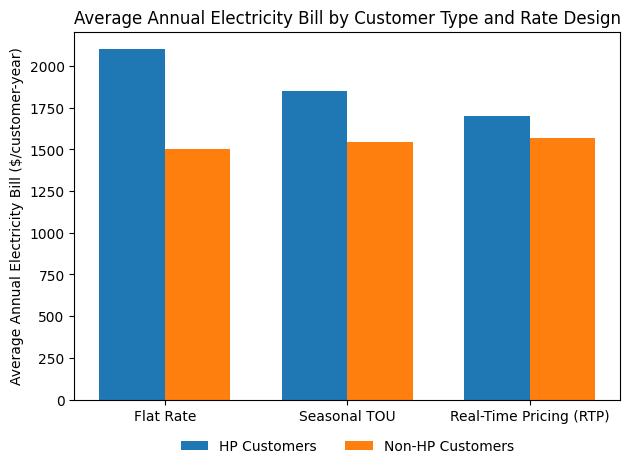
Figure 2 (Bill Comparison)
HP Trajectory Over Time
Figure 3 shows how average daily electricity demand across the NYISO system shifts as heat-pump adoption increases. In 2025, demand remains predominantly summer-peaking. By 2030, growing electrified heating begins to raise winter demand. By 2035, the system clearly becomes winter-peaking, with the highest average daily loads occurring during cold months. This change is driven by the cumulative winter heating load from heat pumps, which adds demand during periods that increasingly define system capacity and reliability needs.
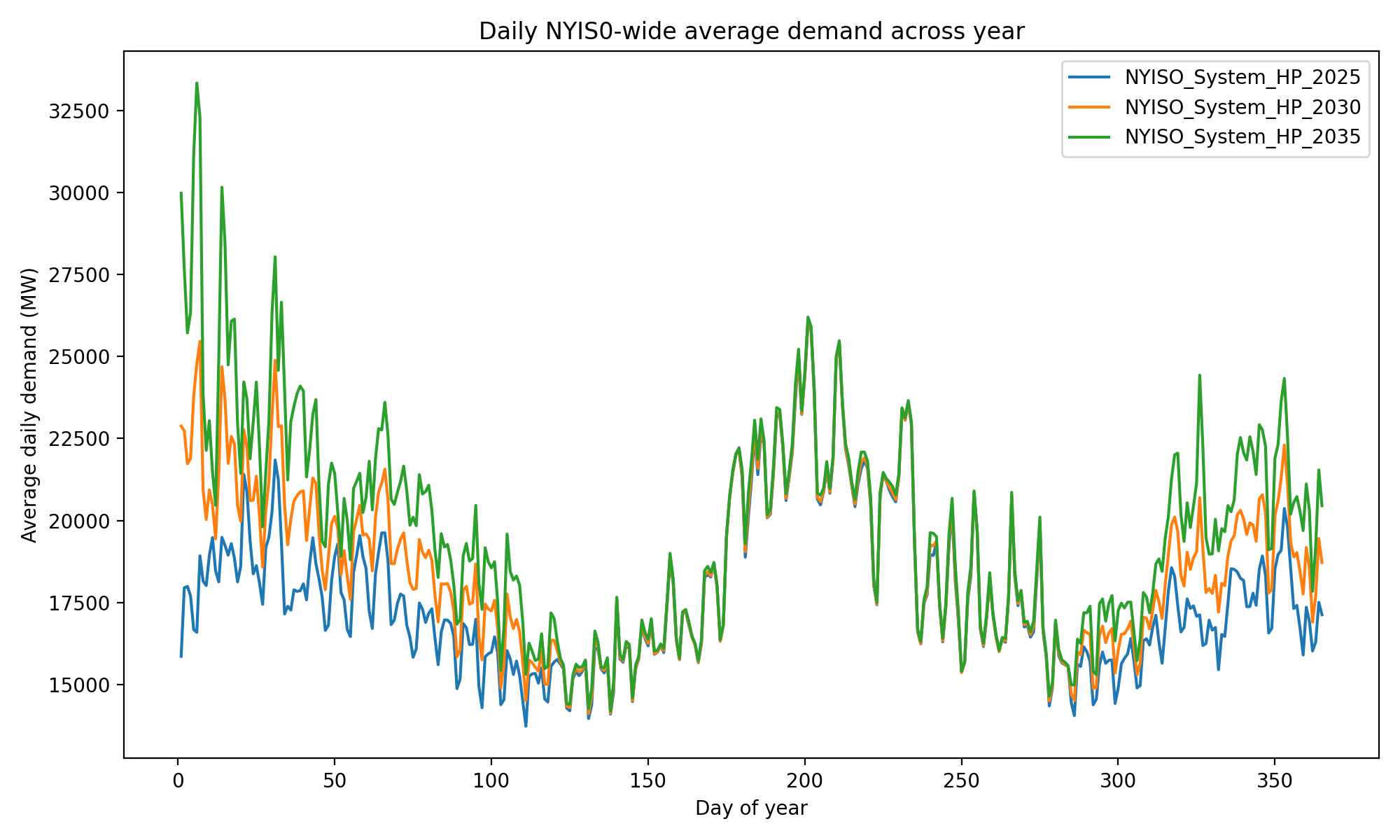
Figure 3 (Annual Demand Over Time)
This seasonal shift provides important context for rate design. As the system moves toward winter-peaking conditions, charging customers based on historical summer peak assumptions becomes less representative of future costs. Figure 4 builds on this transition by illustrating how a seasonal rate discount for heat-pump customers can be structured to taper over time, providing early adoption support while gradually converging toward rates that reflect evolving winter system conditions.
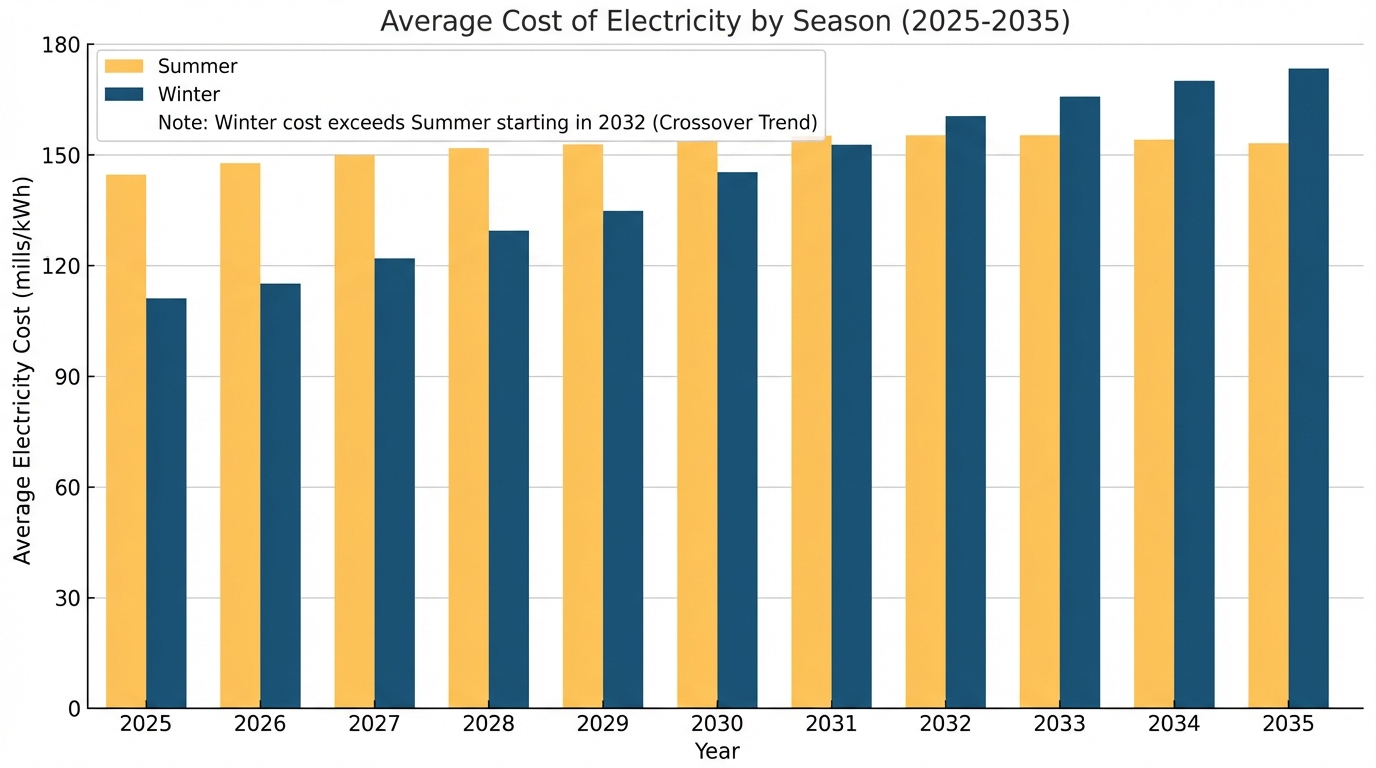
Figure 4 (Shift in Cost-Causation Over Time)
Conclusion

Ke Xin Zuo (Sherry)
Ph.D. Student, Operations Research and Information Engineering, Cornell University
As New York transitions toward widespread heat-pump adoption, electricity rates must perform well not only under today’s conditions but throughout a prolonged period of mixed adoption. This analysis shows that traditional flat volumetric rates become increasingly misaligned as electrified heating shifts demand toward winter periods that drive system costs. Evaluating rates dynamically — tracking bills, cost recovery, and adoption together - reveals how rate design can either support or undermine electrification goals during this transition. I continue to work with Switchbox and collaborators at NREL to build an end-to-end platform for robust rate analysis, aiming to extend NREL’s Consumer Affordability and Integrated Rates Optimization (CAIRO) software suite.
Key Takeaways
Heat-pump adoption reshapes system seasonality. As electric heating grows, winter demand increasingly drives system costs, challenging rate designs built around historical summer peaks.
Charging customers primarily based on volumetric electricity use causes heat-pump households to overpay relative to the costs they create, while non-heat-pump households may be under-charged.
For each customer, we must determine a cost-causative benchmark based on marginal cost economics to reveal when electricity use is actually expensive to serve.
Seasonal rates can then be constructed in a way that efficiently allocates costs to the season in which they occur, while remaining interpretable for consumers.
Rate design must be evaluated dynamically, not statically. A rate that appears reasonable today may perform poorly as electrification progresses; explicitly modeling mixed adoption and bill outcomes over time is essential for fair and durable rate reform